

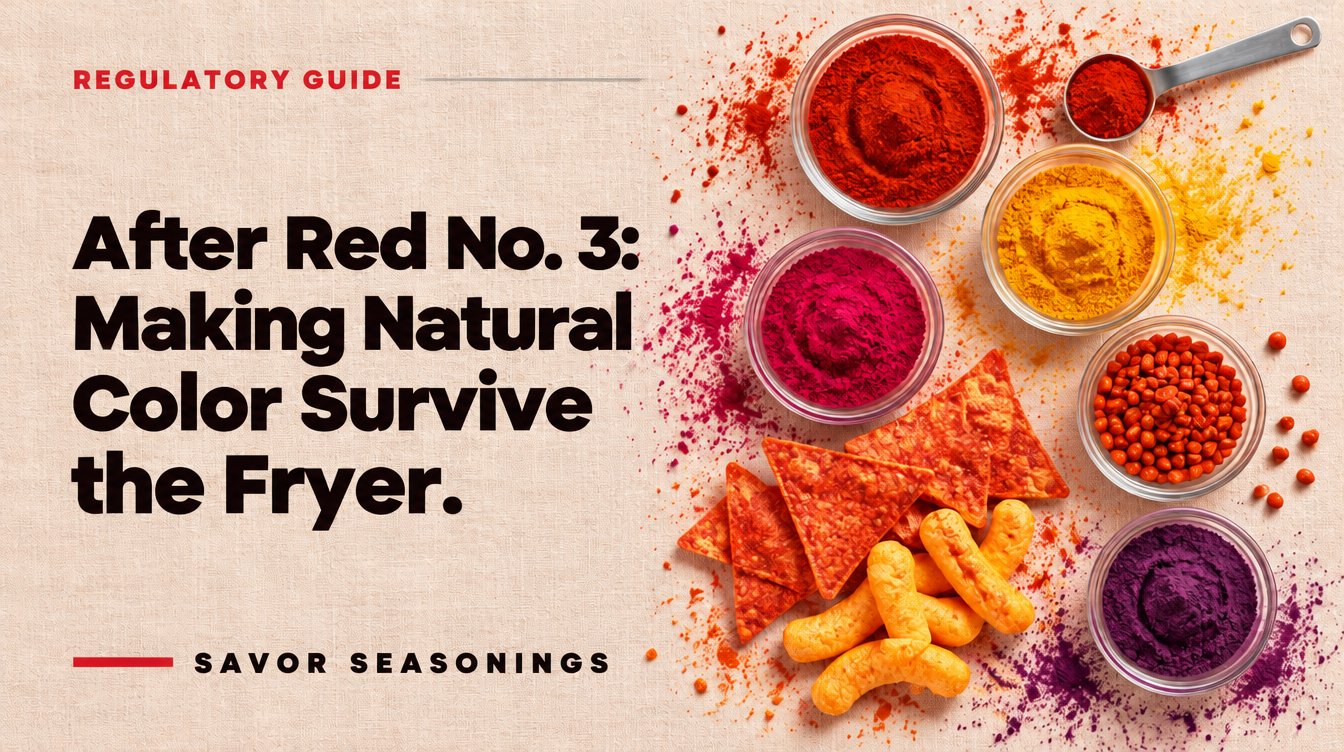
Natural color in snack seasoning works, but each colorant breaks down for a different reason: heat, light, oxygen or pH. Pick the colorant for your process, protect it in the bag, and set a color spec that allows for some natural drift.
The deadline is close. FDA’s ban on Red No. 3 in food takes effect January 15, 2027, and the agency has asked the industry to phase out petroleum-based dyes more broadly by the end of 2026. Plenty of companies have already committed. Plenty more are quietly running trials and hoping the new color holds up.
Here’s the honest truth: some of those trials are going to look great on the bench and fade by week six.
Why synthetic color was so easy
Synthetic dyes were stable. That was the whole appeal. Heat, light, oil, time, they mostly didn’t care.
Natural colors care about all of it. Each one has its own weak spot, and the switch goes smoothly once you know which weakness you’re managing.
Know what kills each color
| Colorant | Shade | Main weakness | Where it works |
|---|---|---|---|
| Paprika (and oleoresin) | Red-orange | Light and oxygen fade it | Oil-based seasonings, red chips |
| Turmeric | Bright yellow | Light; shifts color with pH | Cheese and mustard profiles |
| Annatto | Yellow to orange | Fairly stable; form matters | Cheese and orange snacks |
| Beet | Pink to red | Heat breaks it down | Low-heat or post-fry topical |
| Black carrot and other anthocyanins | Red to purple | Shifts with pH | Acidic profiles |
The pattern: apply heat-sensitive colors after the fryer, not in the dough. Protect light-sensitive ones in the bag. And match pH-sensitive colors to the flavor’s acidity, because the same anthocyanin can look red in one seasoning and muddy purple in another.
Paprika is the workhorse, and the one that fades
For a lot of red and orange snacks, paprika is the answer. It’s familiar, it’s flavorful, and on a label it reads like food.
The catch is fade. Paprika color drops with light and oxygen exposure, so a bag sitting under store lights can lose its glow faster than you’d like. Antioxidants like rosemary extract and mixed tocopherols help slow that down. So does packaging with a good light and oxygen barrier.
We’ll confess, our early natural-red trials looked a little brown by the end of shelf life. Fixing that was mostly about protection, not about the paprika itself.
Rethink your color spec
This one gets skipped. Your old color spec was written around a synthetic dye that barely moved. Natural color will vary a little from lot to lot, because it comes from crops.
That’s not a defect. It’s agriculture. Set a realistic color range with your QA team now, before the first natural lot comes in a shade warmer than the old one and someone puts it on hold.
Don’t forget the label
Paprika and turmeric are spices, but when they’re there for color, they have to be declared as color. On the ingredient line that usually looks like “paprika (color)” or “spice and coloring.” Bring your regulatory team in early so the new panel is right the first time.
And yes, swapping in natural color is a nice clean label win too. If you’re reworking the formula anyway, it’s worth asking what else could come off the label. Read our post on going dye-free here.
Test it like it’ll actually be sold
Bench color is not shelf color. Before you lock anything:
- Run the seasoning through your actual fryer or oven process.
- Store finished product under retail-style light.
- Pull and photograph samples at intervals across the full shelf life.
Compare those photos side by side. That’s where you find out if the color really holds.
How we help
We’ve been building seasonings with natural color for years, and we know which colorants hold up in which applications. If you’re working against the Red No. 3 deadline or getting ahead of the wider phase-out, start a flavor project with us or see our certifications and quality standards.
Send us the product that has to stay red. We’ll help you keep it that way.
Frequently Asked Questions
When does the Red No. 3 ban take effect for food?
FDA’s ban on Red No. 3 in food takes effect January 15, 2027.
What natural color replaces red dye in chips?
Paprika and paprika oleoresin are common choices for red and orange snacks. Beet and black carrot can work in some applications but are more sensitive to heat or pH.
Why does natural color fade in snacks?
Natural colors break down from light, oxygen, heat or pH changes, depending on the colorant. Antioxidants and protective packaging help.
How do you label paprika used for color?
When paprika or turmeric is used for color, it’s typically declared as “paprika (color)” or as “spice and coloring” on the ingredient list.


 Moocow Creative